Is Berlin's classic nightlife facing a crisis?
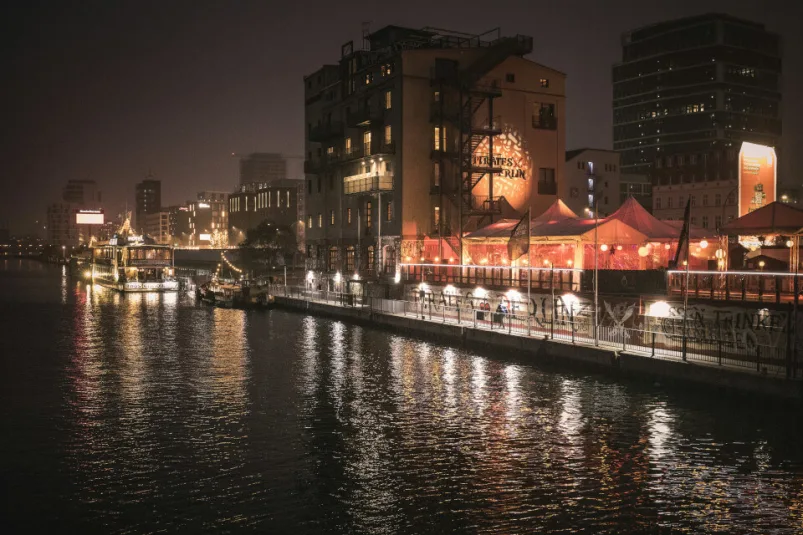
Berlin is known worldwide for its endless nights, the thumping bass in old power stations, and a club culture that was considered untouchable for decades. But anyone walking through the streets of Friedrichshain or Kreuzberg in 2026 will sense a change. The lines in front of the legendary doors aren't necessarily shorter, but the mood has changed. It's no longer just the music that sets the pace, but increasingly also economic reality and a shift in leisure behavior, which has moved heavily into the digital space.
The capital is at a crossroads. While institutions such as Berghain continue to stand firm, many other venues are fighting for their very survival. The reasons for this are manifold and range from exploding
Shift from clubbing to private home entertainment
The retreat into privacy is more than just a short-term trend; it marks a structural change in Berlin's nightlife. Just a few years ago, going to a club on the weekend was almost inevitable. Today, club owners no longer compete only with the bar next door, but also with high-definition streaming services, online multiplayer video games, virtual escape rooms, and an ever-growing selection of digital entertainment options that are conveniently available from the comfort of one's sofa. After the pandemic, many people realized that social experiences and entertainment do not always require waiting in line or paying an entrance fee.
The economic consequences of this development are alarming and threaten Berlin's cultural landscape. Well-known closures such as that of the Watergate Club at the end of 2024 or the uncertainty surrounding Wilde Renate have shown that even established names are not safe. Clubs are under enormous cost pressure due to inflation and rising energy prices, while at the same time the public's willingness to pay is declining. The home offers a controllable, often cheaper alternative that is becoming increasingly attractive to many Berliners in view of the rising cost of living.
Influence of modern gaming culture on social leisure behavior
An often underestimated factor in this equation is the rise of gaming culture to a dominant social experience. Video games are no longer an isolated activity that you do alone in a dark room. Platforms such as Discord and Twitch have created virtual spaces that are comparable to a bar or club in terms of their social dynamics. Here, you can meet friends, listen to music together, exchange ideas, and experience emotional highs and lows—all from the comfort of your gaming chair.
For today's generation, who did not have access to physical clubs during their formative years, this digital space is often the primary place for socialization. The interactivity of modern games offers a dopamine rush that a passive evening on the dance floor can sometimes find difficult to compete with.
While you are “only” a guest in a club, you are an active participant in a game. This expectation of active participation and constant stimulation is increasingly transferring to all leisure activities and posing major challenges for traditional, analog forms of entertainment.
Furthermore, the boundaries between gaming and clubbing are becoming increasingly blurred. Virtual concerts in gaming worlds such as Fortnite or Roblox attract millions of viewers and offer visual spectacles that would be virtually impossible to achieve in physical form. These events are not bound by opening hours, bouncer policies, or fire safety regulations. They are global, inclusive, and instantly available. For the Berlin club scene, this means that it no longer has to offer just a place to dance, but must create an experience that is so unique and intense that it trumps the convenience of the digital alternative.
Cost-benefit comparison between analog and digital entertainment
However, perhaps the most decisive factor in the current crisis is simply the economics of entertainment. An evening at a Berlin club has become a considerable investment in 2026. If you add up the entrance fee, cloakroom, drinks, and travel costs, you quickly end up with sums that could pay for months of digital subscriptions. In times of economic uncertainty, consumers look very closely at where they get the most value for their money, and digital offerings often come out on top in terms of efficiency.
With almost half of the operators seeing no economic prospects, the city is facing a cultural clear-cutting that could permanently change the face of Berlin.
Future prospects for hybrid concepts in Berlin locations
Despite the gloomy forecasts, Berlin's nightlife is far from disappearing completely. Instead, the pressure is forcing creative adaptations and new business models. The future probably lies in hybrid concepts that combine the best of both worlds.
Clubs are beginning to open their premises during the day for co-working, art exhibitions, or markets to cover their high fixed costs. The integration of digital elements, such as high-quality live streams of DJ sets, which became popular during the pandemic, is also being further professionalized to reach a global audience and tap into additional sources of income.
The importance of club culture for the city remains undisputed, even from a purely economic point of view. This figure underscores that international interest in the Berlin scene remains unbroken, even if the behavior of the local population is changing. The challenge now is to harness this tourist potential without sacrificing the authenticity and freedom that made Berlin famous in the first place.
Ultimately, the wheat will be separated from the chaff. The clubs that survive will be those that offer more than just loud music and dark rooms. They will have to become cultural hubs that foster community—whether analog on the dance floor or digitally networked. The upheaval is painful and will claim further victims, but it also offers the chance to reinvent Berlin's nightlife and make it fit for the future. It is not an end, but an evolution.

Berlin Poche
Editorial Team
Always looking for new addresses, we like to share our discoveries and make you discover the best places in Berlin.