How Berlin's style constantly reinvents itself
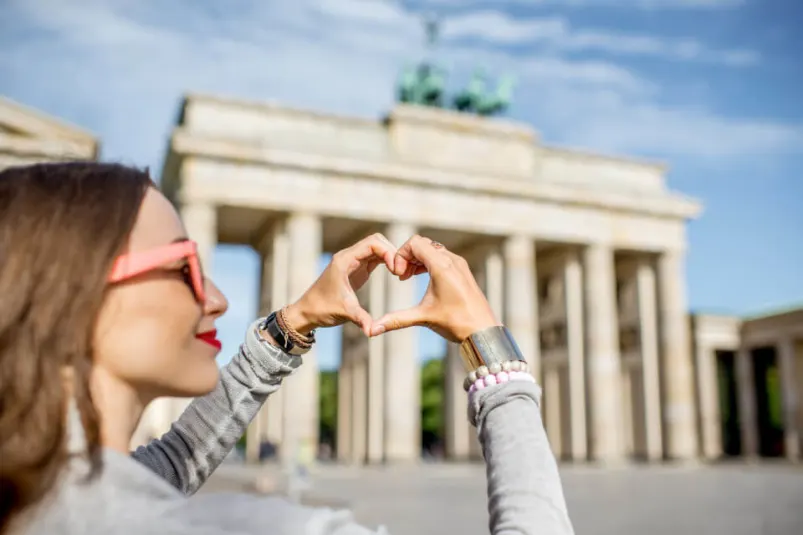
Berlin has never been static. The city thrives on contrasts, contradictions, and the coexistence of different milieus. Between old-style kitchens in Neukölln, gallery spaces in Mitte, and flea market finds from Prenzlauer Berg, a style emerges that is less about trends and more about attitude. Clothing, accessories, and details are rarely an end in themselves in the capital. They tell stories about everyday life, work, attitude, and origin.
Fashion in Berlin is often functional. Anyone who cycles every day, walks in changeable weather, or commutes between the office, studio, and late-night shop needs clothing that can keep up. Style here is not born of perfection, but of mixture. Vintage meets techwear, designer pieces meet secondhand, business shirts meet sneakers.
Between understatement and statement pieces
In hardly any other German city is fashionable restraint as prevalent as striking individuality. Black remains a constant, but is repeatedly broken up by unusual cuts, materials, or small, precisely placed accents.
Accessories play a special role here. Bags, jewelry, and headwear serve as personal markers. Glasses, too, are no longer just functional aids, but part of an overall urban look. In a city with a high density of creative professionals and digital workers, clean lines, minimalist frames, and deliberately chosen retro models are a natural part of the picture.
Neighborhood culture shapes aesthetics
Each district has its own codes. Friedrichshain is dominated by a mix of streetwear and alternative influences, while Charlottenburg tends toward classic cuts and muted colors. Kreuzberg combines political attitude with fashionable nonchalance, while Mitte oscillates between minimalism and international influence.
These differences are not accidental. They reflect social structures, living situations, and professional realities. Start-up employees, art students, self-employed people in the creative sector, and employees of international companies move in the same urban space, but with different stylistic nuances.
Functionality as a basic Berlin principle
Berlin is not a city where people dress exclusively for the catwalk. Everyday life demands mobility. Many journeys are made on foot or by bicycle. Subway rides, spontaneous meetings in the park, or long working days in co-working spaces set the pace.
That's why materials and workmanship are becoming increasingly important. Robust fabrics, comfortable cuts, and flexible combinations are at the forefront. Accessories are also chosen for their practicality. Glasses not only have to look good, they also have to cope with long hours spent staring at a screen in the home office or changing light conditions in everyday city life.
Digital working environments are changing the look
With the growth of the tech and creative scene, visual self-presentation has also changed. Video calls, social media presence, and digital meetings influence how people want to be perceived. Upper body aesthetics are becoming more relevant, and details in the face are coming into sharper focus.
This is not about staging in the classic sense, but about coherent self-presentation. Subtle accessories or clean lines support a professional appearance without seeming artificial. Especially in Berlin, where hierarchies are often flatter and dress codes more relaxed, professionalism arises less from convention than from authenticity.
Sustainability and conscious consumption
Berlin is considered one of the most sustainable cities in Germany. Flea markets, second-hand stores, and small labels characterize the cityscape. Consumption is often reflected upon. Quality takes precedence over quantity, individuality over mass-produced goods.
This demand is also evident in accessories. Durability, reparability, and fair production are becoming increasingly important. Those who decide to buy new items often look for a clear price structure and transparent advice. The combination of design, function, and cost awareness is particularly relevant in an urban context.
Style as an expression of attitude
In Berlin, fashion is rarely purely decorative. It stands for self-image. Between political engagement, artistic freedom, and economic dynamism, a field of tension arises that is also expressed visually. Clothing and accessories become part of this identity without having to be loud.
The cityscape therefore remains in flux. Trends are adapted, broken, or ignored. It is precisely this openness that defines Berlin's aesthetic. It is not smooth or uniform, but lively and multi-layered.
Ultimately, it becomes clear that style in Berlin does not arise from perfection, but from everyday life. From journeys through different neighborhoods, from encounters, from work and leisure in fluid transition. Those who move in this environment automatically develop a look that reflects the reality of life rather than following trends.
Conclusion
Berlin's style is not dictated by fashion trends, but rather by movement, diversity, and everyday life. Between neighborhood culture, the digital working world, and conscious consumption, an aesthetic is developing that combines functionality and individuality. Details play a greater role than loud statements—they emphasize attitude without pushing themselves into the foreground.
Whether clothing, accessories, or eyewear: what matters is not so much the trend as how well it fits into one's own lifestyle. In a city that is constantly redefining itself, authenticity remains the true principle of style.

Berlin Poche
Editorial Team
Always looking for new addresses, we like to share our discoveries and make you discover the best places in Berlin.