Is Berlin Tap Water Safe to Drink?
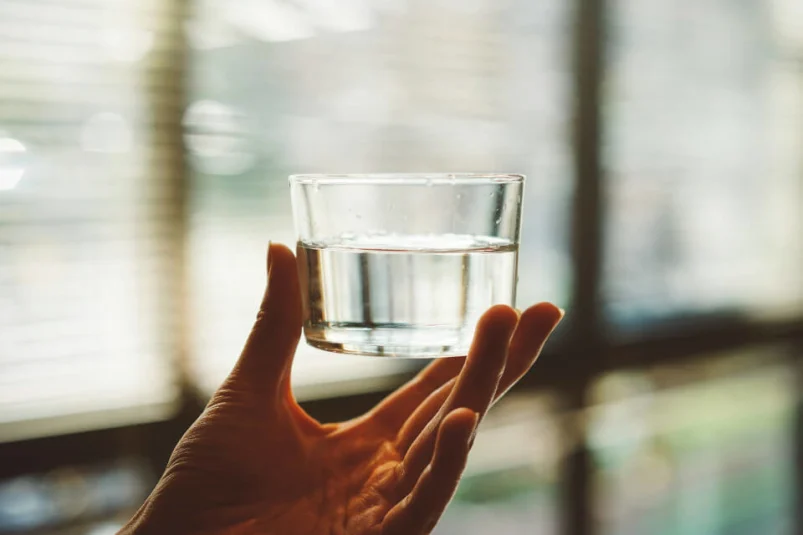
Anyone who turns on the faucet in Berlin inevitably asks themselves: Can I drink this water without hesitation? The short answer is: Yes, absolutely. Berlin’s tap water is among the most strictly regulated food products of all and easily meets the stringent requirements of the German Drinking Water Ordinance (TrinkwV).
But how clean is Berlin’s tap water? Where does its quality come from? How has it evolved? And what’s the truth behind the myths about hormones or medication residues? A scientifically sound yet accessible look at Berlin’s water.
Where Does Berlin’s Water Come From? The Principle of Bank Filtration
To understand the quality, you need to know the source. Berlin obtains 100% of its drinking water from its own groundwater. This is essentially bank filtrate: surface water from the Spree and Havel rivers seeps through thick layers of sand and gravel in the ground.
This natural sand filter pre-treats the water before it is pumped up from wells by the Berlin Water Utilities (BWB) and then aerated and filtered at the water treatment plants. What makes it special: No chlorine is added to Berlin’s water. It requires no chemical disinfectants whatsoever.
The Analysis: Key Measurements and Constituents
Berliner Wasserbetriebe conducts over 200,000 analyses annually. All results are well below the legal limits. Here is an overview of the most important parameters:
1. Hardness (calcium and magnesium)
Berlin has hard water (approx. 14 to 25 °dH – German hardness).
- What does this mean scientifically? “Hardness” describes the concentration of alkaline earth metals, primarily calcium ($Ca^{2+}$) and magnesium ($Mg^{2+}$).
- Health benefits: Excellent. Calcium strengthens bones, and magnesium is important for muscles and nerves. For coffee makers and kettles, however, it means faster scaling.
2. Nitrate and Nitrite
- The level: Levels in Berlin are usually below 4 mg/l.
- The limit: 50 mg/l.
- Background: Nitrate usually comes from agricultural fertilizers. Excessively high levels can be converted into nitrite in the body, which can inhibit oxygen transport in the blood (especially in infants). Berlin’s water is extremely safe in this regard.
3. Heavy Metals (Lead, Copper, Nickel)
- The level: These substances are not detectable at the water treatment plant itself.
- The risk: Heavy metals enter the water almost exclusively through old household pipes (lead pipes in older buildings constructed before 1973).
Hormones, Estrogens, and Trace Substances in Berlin’s Tap Water: Myth vs. Reality
One issue that often worries consumers is the presence of residues from contraceptives (estrogens), painkillers (such as diclofenac), or X-ray contrast agents. Since Berlin’s water cycle is relatively closed (treated wastewater flows into the rivers and is partially recycled as bank filtrate), this concern is not scientifically unfounded.
What does the research say?
Yes, modern measurement methods can detect the tiniest trace substances in the nanogram range ($ng/l$). A nanogram is one billionth of a gram.
- Hormones/estrogens: Synthetic estrogens (e.g., from birth control pills) are already almost completely broken down by biological processes in wastewater treatment plants and in soil layers. In Berlin’s drinking water, they are absolutely irrelevant from a toxicological standpoint for humans. To ingest the hormone dose equivalent to a single birth control pill through tap water, a person would have to drink two liters of Berlin tap water every day for several tens of thousands of years.
- Trace substances in general: Berlin’s water utilities are increasingly relying on the so-called fourth treatment stage in wastewater treatment plants (using ozonation and activated carbon filters) to filter out precisely these organic trace substances from the wastewater before they even enter the water cycle.
Historical Development: Has the Water Quality Improved?
The quality of Berlin’s water has improved dramatically over the past 30 to 40 years.
- Before 1990: Due to industry in the GDR and a lack of wastewater treatment plants in the surrounding area, the Spree and Havel rivers were heavily polluted with heavy metals and phosphates.
- After reunification: Billions were invested in modernizing the wastewater treatment plants. Phosphate and nitrogen concentrations in Berlin’s surface waters were drastically reduced. In addition, industrial pollution was almost completely eliminated. Today, Berlin’s groundwater is cleaner and more consistently protected than ever before.
A Comparison of Water Quality in Berlin: National and International
Comparison Across Germany
Within Germany, there is hardly any variation in water quality, as the Drinking Water Ordinance sets the same strict standards everywhere. The main difference lies in taste and hardness:
- Berlin vs. Munich/Cologne: All three cities have very calcareous, mineral-rich (hard) water.
- Berlin vs. Hamburg/Leipzig: Hamburg draws some of its water from deeper heathland aquifers; it tends to be slightly softer than Berlin’s water.
European Comparison (Capital Cities)
By European standards, Berlin (like almost all of Germany) ranks among the very best.
| City | Water Quality / Treatment | Potability |
|---|---|---|
| Berlin | Excellent. Natural filtration, no chlorine. | Safe |
| Vienna | World-class. Comes directly from the Alps via high-altitude water supply lines. | Safe |
| Paris | Good, but heavily treated (ozone, UV) and often lightly chlorinated. | Safe |
| London | Safe, but heavily treated. Often tastes chemical due to noticeable chlorination. | Safe |
| Rome | Safe, often very hard; some older pipe networks are chlorinated. | Safe |
While in cities like London or Paris you often notice the typical smell of chlorine—used to disinfect the pipe network—Berlin stands out by avoiding chemical additives in its water treatment plants.
Conclusion: Is it safe to drink tap water in Berlin?
Can you drink the tap water in Berlin without concern? Scientifically speaking, there is absolutely no reason not to consume Berlin tap water. It is fresh, rich in valuable minerals such as calcium, and extremely clean.
Important Note for Consumers: Berliner Wasserbetriebe’s responsibility ends at the property line. If you live in an unrenovated older building and are unsure whether old lead pipes are still installed in the building, you can have the water tested in a laboratory or simply let the water run until it feels noticeably cool coming out of the tap (to flush out “stagnant water”).

Berlin Poche
Editorial Team
Always looking for new addresses, we like to share our discoveries and make you discover the best places in Berlin.