6 Easter traditions in Germany (and what's behind them)
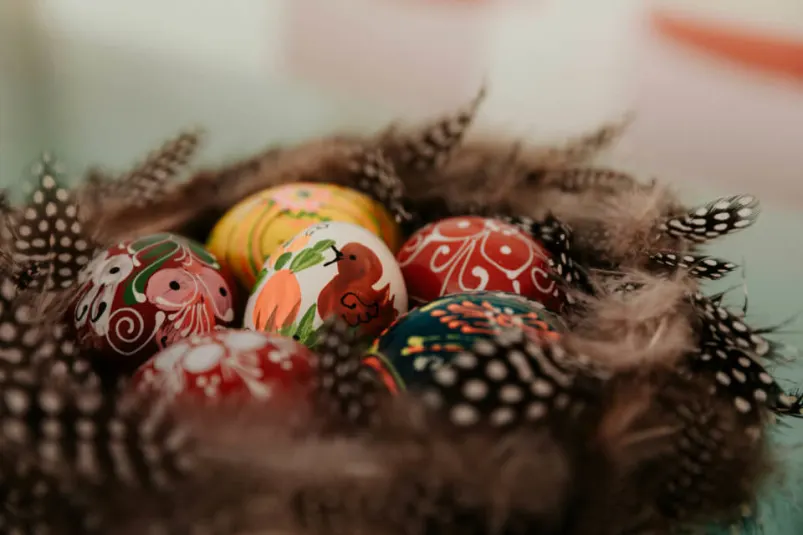
Easter is one of the most important holidays of the year in Germany. For many people, it means a long weekend, the beginning of spring, and time with family. But behind the colorful eggs, Easter bunnies, and big bonfires often lie centuries-old customs. Some are Christian in nature, while others date back to much older spring rituals. Some traditions seem obvious today, but have surprising origins or curious stories behind them.
Here are 6 typical Easter traditions and customs from Germany, along with their meanings and the stories behind them.
1. Dyeing and hiding Easter eggs
Dyeing Easter eggs is one of the best-known Easter traditions in Germany. Weeks before Easter, egg dyes, stickers, and craft kits are already on the shelves in supermarkets. On Easter Sunday, parents hide the colorful eggs in the garden or in the home, and children set out to find them.
The origins of this tradition date back to the Middle Ages. During Lent, people were not allowed to eat eggs. However, chickens continued to lay eggs, and to preserve them, they were boiled. To distinguish them from fresh eggs later on, they were often dyed red. Over time, this developed into the custom of decorating eggs in colorful patterns.
A funny anecdote: In some regions of Germany, so-called “egg rolling” used to be organized. Children rolled their Easter eggs down a hill, and whoever's egg rolled the furthest won.
2. The Easter Bunny
Today, it is hard to imagine Easter without the Easter Bunny. He supposedly brings the eggs and hides them in the garden or in the house.
Interestingly, the Easter Bunny probably originated in Germany. The first written references to him date back to the 17th century. At that time, children were told that a rabbit laid the eggs in the nests they had prepared beforehand.
Why a rabbit of all things? One explanation lies in its symbolism: for centuries, rabbits have been considered a sign of fertility and new life, making them perfect for a spring festival. In addition, rabbits are particularly active in spring, so children could often observe them in fields and meadows.
3. Easter bonfires
In many regions of Germany, large Easter bonfires are lit on the evening before Easter Sunday. This custom is particularly widespread in the north and in rural areas. People gather around the fire, drink something warm, and welcome spring together.
The origin of the Easter bonfire is probably older than Christianity. Centuries ago, people lit large fires in spring to symbolically drive away winter. Later, the custom was adopted by the church and interpreted as a symbol of the light of resurrection.
In some places, the wood piles are collected weeks in advance, often by young people from the village, who turn it into a small community activity.
4. The Easter tree
For many German households, an Easter tree is as much a part of Easter as a Christmas tree is part of Christmas. Branches, usually from forsythia, willow, or cherry trees, are placed in a vase and decorated with colorful Easter eggs.
This custom symbolizes the awakening of nature in spring. The branches often begin to bloom in the warm apartment, which is considered a sign of new life.
A small peculiarity: in the past, real, blown eggs were often hung up. Children painted them with brushes or wax crayons, and sometimes one or two eggs were broken during the crafting process.
5. Making Easter nests
In many families, children make small nests out of grass, moss, or twigs before Easter. These are placed in the garden or on the balcony so that the Easter Bunny can put his eggs in them.
This custom probably dates back to ancient spring rituals, in which people prepared small “nests” for nature spirits or fertility symbols. Later, it became a playful tradition for children.
Today, Easter baskets contain not only eggs, but also small chocolate bunnies, sweets, or small gifts.
6. Easter lamb cake
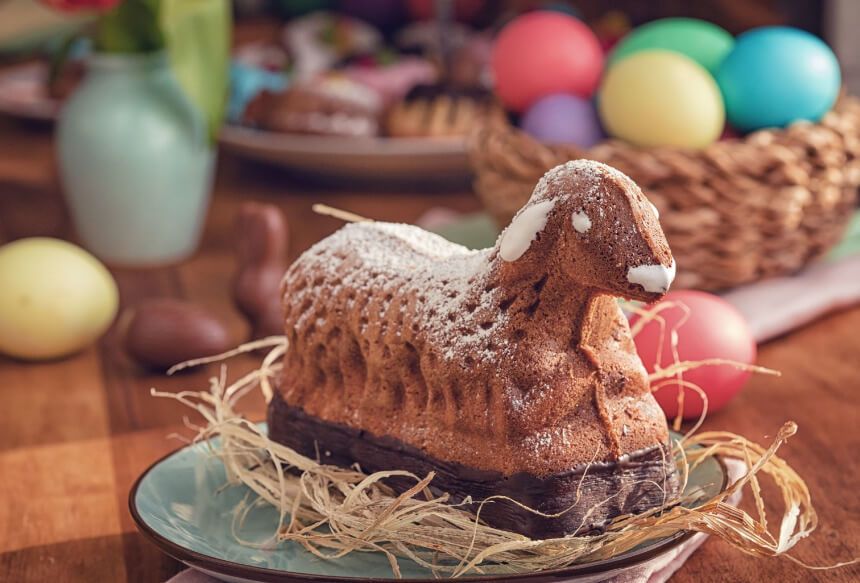
In addition to chocolate and eggs, Germany also has a typical Easter pastry: the Easter lamb. This is a sponge cake baked in a special mold so that it looks like a small lamb.
The lamb has religious significance and in Christianity represents Jesus Christ, who is often referred to as the “Lamb of God.” The lamb has therefore been a symbol of Easter for centuries.
Many families bake the Easter lamb together on Holy Saturday. Finally, it is dusted with powdered sugar and sometimes decorated with a small flag.
Why German Easter traditions are still so popular today
Many Easter customs in Germany combine ancient spring rituals with Christian symbols and modern family traditions. That's exactly what makes them so special: they bring generations together and create little moments of joy, whether it's hunting for eggs in the garden, making an Easter tree, or gathering around an Easter bonfire.
And perhaps that is precisely why these traditions have been passed down for centuries: every year, they remind us that spring is beginning and that sometimes a little magic can be found in a colorful Easter egg. 🐣🌷

Berlin Poche
Editorial Team
Always looking for new addresses, we like to share our discoveries and make you discover the best places in Berlin.