How Games Are Becoming a Staple of Evenings in Kreuzberg and Friedrichshain
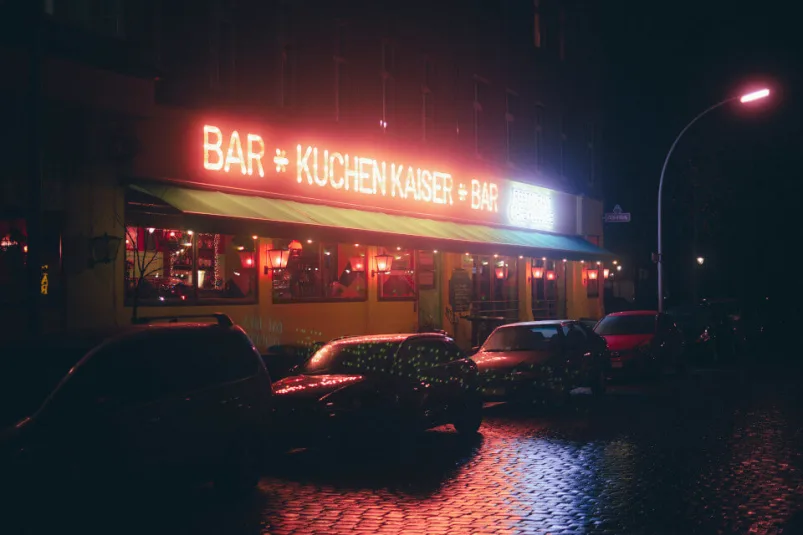
Anyone out and about in Berlin between Kottbusser Tor, Boxhagener Platz, and Warschauer Straße quickly realizes that the city’s nightlife no longer takes place exclusively in clubs. Between the last beer at the Späti before SO36 and the train ride back to Neukölln, an ever-growing portion of evening entertainment is shifting to group chats, voice channels, and shared online sessions. The following text explores why this part of East Berlin in particular has become a hub for digital gaming sessions and what role neighborhoods, scenes, and shared apartments play in this.
Kreuzberg and Friedrichshain as a Resonance Space for Digital Formats
Eastern Berlin has a long tradition of quietly testing new cultural formats first and only later discussing them publicly. This very reflex is currently evident around video games, which are regularly played in shared apartment kitchens between Görlitzer Park and the RAW grounds. Newsrooms reporting at the neighborhood level observe not so much the game itself as the way it is embedded in social dynamics between Kreuzberg, Friedrichshain, and Neukölln.
This ecosystem operates by its own rules. A format doesn’t catch on in Kreuzberg or at Boxhagener Platz because a marketing department is aggressively promoting it, but because it fits into conversations that are happening anyway. Between the Berghain line, the kebab stand, and the backyard concert, it’s the daily repetition that determines whether an event becomes a natural part of the evening. Anyone who understands this mechanism realizes why traditional advertising formats often fizzle out in East Berlin, while a single casual mention during a living room gathering on Paul-Lincke-Ufer can elevate a new format into everyday life within a matter of days.
The East Berlin scene has tried out several such formats in recent years. Some have stuck around between Markthalle Neun and Urban Spree, while others disappeared from timelines after just a few months. The deciding factor was rarely the technology, but rather whether the format fits the neighborhood’s pace and whether it supports a group without tying up the attention of individual members too much.
How the game fits into evening routines in Kreuzberg and Friedrichshain
Typical evenings in Kreuzberg or Friedrichshain don’t follow a set script, but certain stops keep cropping up. Many groups first meet at a Späti near Lausitzer Platz, then arrange to play via a voice chat channel. The game rarely takes center stage; instead, it serves as a background rhythm that the group uses to guide their way through the evening.
Some Berlin groups have now established regular times when they play together. This is reminiscent of movie nights at Babylon Kreuzberg, except that the content is interactive and the audience itself becomes part of the action. Between an old apartment in Friedrichshain and a Kreuzberg backyard, a small ritual of its own has emerged, defined less by technology than by shared schedules. Anyone who is on the voice channel at the same time on Wednesday evenings is part of it, even if they aren’t playing themselves that evening, but are just listening or commenting.
Without a look at the local crypto and digital scene, this integration is hard to explain, and Berlin observations on digital nightlife trends show how strongly a distinct language for short digital sessions has developed in Kreuzberg, Neukölln, and around the RAW grounds. This language is not technical, but social, and it determines which format gains traction in the neighborhood.
Community and Conversation Around the Game
One reason why crash formats are finding fertile ground in eastern Berlin is the importance of shared conversations. The city is known for its culture of discussion, and this culture is increasingly shifting to digital spaces without losing its characteristic Berlin directness. Anyone who joins a voice chat with people from Kreuzberg quickly notices that the tone is the same as at the bar of a Bergmannstraße pub.
In Friedrichshain, several small communities have emerged where participants share strategies, experiences, and humorous anecdotes. It’s less about individual results and more about collectively reflecting on the evening, much like the post-event discussion following a concert at the Astra Kulturhaus or a reading at ACUD.
This form of communication differs significantly from traditional esports. It’s not about rankings or trophies, but about time spent together. This fits well with a neighborhood that often views entertainment as a social byproduct, not as a competitive sport. Many rounds don’t end with a winner, but with shared laughter or a new plan for the next evening.
| Aspect | Traditional club night | Quick game session in chat |
|---|---|---|
| Entry barrier | Admission, travel, dress code | Login and voice channel |
| Duration of an interaction | Several hours | A few seconds to minutes |
| Social level | Face-to-face on-site | Voice and chat simultaneously |
| Planning required | Usually in advance | Spontaneous participation possible |
The figures in the overview above only become meaningful when compared with longer time series. Editorial offices in Friedrichshain usually cross-check them with neighborhood observations before drawing conclusions. This reveals that the actual defining feature lies not in click counts, but in the way game sessions fit into existing evening routines without dominating them. A crash game that takes place between a conversation about rent prices at Boxhagener Platz and a discussion about the next demonstration at Kottbusser Tor is perceived neither as the main event nor as a disruption, but rather as background noise that belongs to the evening just as much as the hum of a refrigerator in a shared apartment kitchen.
Responsible Management of Entertainment Budgets in Berlin
As much as crash formats fit the social side of Berlin’s nightlife, it remains just as important to manage your budget wisely. Entertainment costs money, and digital entertainment is no exception. Anyone in Kreuzberg who’s already calculating whether a night out at the club or a late-night trip to the corner store is affordable should approach gaming budgets with the same honesty.
Many platforms now offer their own tools to manage stakes, session duration, and breaks. These features are not meant as a formality, but as an integral part of a healthy approach to online entertainment. In Berlin groups, it has proven effective to set these limits together and discuss them openly, much like agreeing on household chores in a shared apartment.
Educational programs focused on digital participation and media literacy are also playing a growing role. In Kreuzberg and Friedrichshain, several initiatives are working to help users assess their own gaming behavior, and recent reports on German internet policy place this work within a broader regulatory framework. It is precisely this combination of neighborhood initiatives and national debate that shapes how responsible use is discussed in the capital.
Language, Design, and Access in Everyday Berlin Life
One factor that is often underestimated when it comes to the spread of new formats is the quality of the German-language interface. Many international platforms offer translations, but the quality varies considerably. In Berlin, where people switch between Turkish, English, and German in a single sentence, users immediately notice when an interface feels foreign.
The game is offered in a cleanly translated version, which makes a noticeable difference for a German-speaking Kreuzberg community. Players don’t have to switch back and forth between languages, and that lowers the barrier to entry, especially for groups where not everyone grew up with English terms. Especially in mixed-nationality shared apartments, where one person may have only been living in Berlin for two years while another grew up in Friedrichshain, the clarity of the interface determines whether everyone can participate or whether a silent two-tiered group emerges.
Design and accessibility are also important. A clean interface without cluttered animations, a mobile version that works on a smartphone while riding the U1, and an easy onboarding process significantly lower the barrier to entry. In a city where people often play games on the go, every second saved during loading counts. Anyone waiting for the S-Bahn between Schlesisches Tor and Warschauer Straße expects a game to respond within seconds and loses interest as soon as a loading bar takes longer than a public transport announcement.
The role of subtle cultural cues should not be overlooked. Color schemes, sound, and the rhythm at which feedback appears influence the gaming experience more than many realize. For a Berlin audience that shuttles between techno sets at Salon Zur Wilden Renate and poetry slams at Lettretage, these cues must be understated and precise.
Finally, the question of discoverability plays a role. Many people only encounter a format when it appears in their immediate surroundings. A friend mentions it in a chat group, a colleague plays it during lunch break at Görlitzer Park, and suddenly the name sticks in your mind. For Kreuzberg and Friedrichshain, this is the typical way digital formats find their place.
Outlook for the Next Season of Digital Berlin Entertainment
The coming months should reveal how firmly “crash” formats will take root in Berlin’s digital nightlife. There are many indications that they will remain a fixture in parts of the Kreuzberg and Friedrichshain scenes, as long as they are seen not as a replacement for the club, but as a complement to the journey home and the gathering on the balcony. The decisive test will come in the second half of the year, when it will become clear whether groups that have been playing regularly since early 2026 can carry their ritual through a hot Berlin summer filled with afternoons at outdoor pools, open-air concerts, and packed beer gardens.
At the same time, it is expected that the platforms themselves will continue to evolve. New features for group sessions, better tools for responsible use, and transparent information on usage are likely to take center stage. Anyone observing the scene in Berlin can already see the first signs of this shift in shared-apartment chats and local Discord groups.
It is also remarkable how blurred the lines between the real and digital nightlife in Berlin have become. Anyone who starts the evening at Kater Blau or About Blank and later ends up in a Friedrichshain shared apartment switches almost casually between the dance floor and the voice channel.
Video games are no substitute for classic Berlin nightlife. They are a complement that fits the unique vibe between Kreuzberg and Friedrichshain and blends so naturally into everyday life—between the corner store, the shared kitchen, and the subway—that many people aren’t even consciously aware of the moment they’re participating. Anyone observing Berlin’s eastern districts sees this not as a break with club culture, but as another chapter in a city that tries out new formats, tests them, and either quickly discards them or quietly incorporates them into its own everyday life until no one knows exactly when it all began.

Berlin Poche
Editorial Team
Always looking for new addresses, we like to share our discoveries and make you discover the best places in Berlin.