The Golden Twenties: How Berlin Is Bringing Back the 1920s
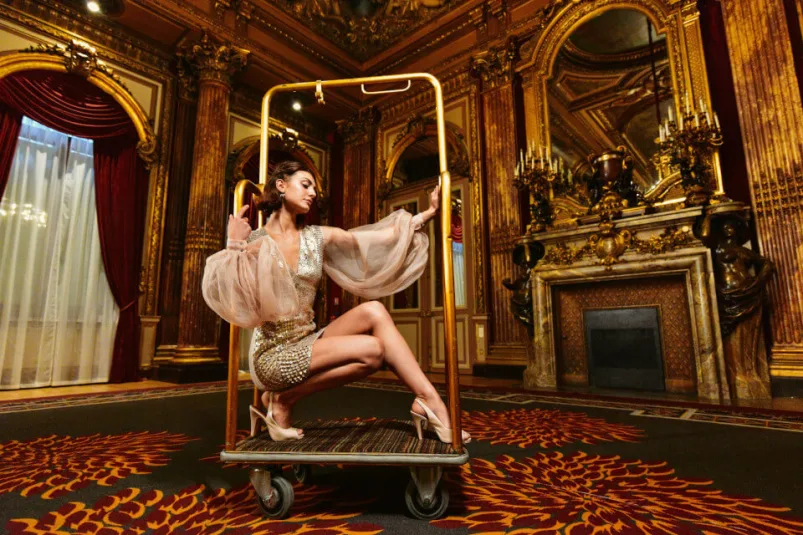
Nine euros. That’s the maximum price this week for any of the more than sixty signature drinks being served in over thirty Berlin bars. From September 4 to 13, 2026, Berlin Cocktail Week has once again dressed the city in its Roaring Twenties finery, and anyone who’s wandered through Mitte or Kreuzberg has noticed it. Fringed dresses at the bar. Pianists playing ragtime as if the last hundred years had never happened. A bartender in Charlottenburg serving his gin fizz with a flourish more reminiscent of a magic show than a cocktail service.
This is no coincidence. The Golden Twenties are back everywhere right now, and Berlin has more of a claim to them than almost any other city in Europe.
Why Berlin, of all places, has never quite let go of the Twenties
Berlin in the 1920s was loud, fast-paced, and quite uninhibited. The city had over 900 registered nightclubs—more than Paris and London combined—and the infamous Kroll Opera House, as well as tiny back-alley bars, attracted artists, hustlers, and the curious alike. An essay from Bowdoin College describes how much this image has since been polished and simplified. The reality of the Weimar Republic wasn’t just cabaret and champagne, but also hyperinflation and political tension. Nevertheless—or perhaps precisely because of this—this image has endured as a cultural blueprint.
Cocktail Week deliberately plays with this ambivalence. We’re not celebrating the crisis; we’re celebrating the energy that emerged from it. The concept is aptly described as a kind of time machine with a bar menu. And yes, that sounds cheesy. But it works anyway.
Speakeasies never really went away—they just changed addresses
The real invention of the Prohibition era wasn’t alcohol itself, but the secrecy surrounding it. Tens of thousands of illegal bars sprang up in the U.S. because legal serving of alcohol was banned. According to The Mob Museum, it was precisely this aesthetic—the mystery, the knock codes on the door, the hidden back entrances—that gave rise to the modern cocktail as an art form in the first place. Bartenders had to get creative to make bad moonshine drinkable. This evolved into an entire culture.
During the Weimar Republic, Berlin didn’t have a prohibition on alcohol, but it did have a similar allure to that of the forbidden. Gay clubs, political cabarets, gambling parlors—all existed in a gray area between tolerance and police raids. Red Bull Music Academy Daily once described Berlin’s nightlife during that era as “organized chaos,” in which every bar had its own subculture. Today’s bar scene is trying to recapture exactly that feeling—only with working air conditioning and card payments.
So anyone who drinks their way through one of the bars participating in Cocktail Week will quickly realize: It’s not just about the drink. It’s about the atmosphere. Candlelight, velvet curtains, a bouncer who first asks if you know the password. A small show, big impact.
From the Card Table to the Cloud: Where the Gambling Flair of the 1920s Lives On Today
But the Golden Twenties were about more than just cocktails and jazz. Private gambling salons, often closely intertwined with nightclubs, were an integral part of that era. Roulette tables under chandeliers, baccarat games in back rooms, the soft clink of chips serving as the night’s own soundtrack. This aesthetic has since become a collector’s item in its own right. At the vintage flea market in the Ballhaus Berlin, old roulette wheels, Art Deco chip sets, and playing cards from precisely this era regularly turn up—often as decorative objects for collectors rather than as gaming equipment.
This is exactly where nostalgia meets the present. Many Berliners who are looking for this kind of atmosphere but don’t have a salon with a tailcoat requirement just around the corner are now turning to the digital world. Card games with Art Deco frames, even store design elements reminiscent of chandeliers and velvet curtains. The card table has remained; only the space around it is now a screen.
Why This Nostalgia Is Gaining Traction Again Right Now
The timing is no coincidence. Berlin’s club culture is in the midst of a genuine existential crisis. According to a recent report by The Berliner, a whopping 39 percent of the clubs surveyed were operating at a loss in 2025, compared to 21 percent in 2017. Young Berliners are drinking less alcohol, going out less often, and spending their leisure budgets differently than they did ten years ago. That’s why the Berlin cultural festival TAG DE CLUBKULTUR will distribute over 410,000 euros to 32 clubs and collectives in October 2026—a clear signal of just how seriously the situation is now being taken.
Against this backdrop, the “Golden Twenties” trend almost seems like an antidote. Instead of chasing new trends, people are turning to something that has worked before: glamour, craftsmanship, and stories. A drink for nine euros is affordable, yet the experience surrounding it remains just as grand.
At the same time, a second trend is emerging that seems almost paradoxical. This October, Berlin Food Week is bringing the OkSoberfest to the Kulturbrauerei for the first time—an event completely free of alcohol. Sobriety is becoming a lifestyle statement in its own right, without sacrificing the desire for spectacle, music, and thrills. People want the show—but not necessarily the hangover afterward.
Between Real Velvet and a Digital Screen
The real question behind all of this is actually quite simple. Is aesthetics enough to satisfy the longing, or do we still need the real space, the real glass in our hand? The answer is probably both—just at different times. After work, the screen is often enough. On the weekend, though, it’s time for the real bar, with real lighting and real people all around.
If you’re looking for new spots for this weekend experience, you’ll find them, for example, at the cocktail bars in Mitte, Prenzlauer Berg, Charlottenburg, or Schöneberg—many of which have exactly that historical touch that Cocktail Week is currently bringing back into vogue all over Berlin.
The Golden Twenties were never just a decade. They were an attitude: make a lot out of a little, turn a back room into a stage. Nine years after their centennial, this principle works surprisingly well, whether at a real bar or at your kitchen table at home with a laptop.
Frequently Asked Questions About Berlin Cocktail Week and the Golden Twenties Trend
What exactly is Berlin Cocktail Week 2026? An annual event during which more than thirty Berlin bars will offer over sixty signature cocktails at a flat price of nine euros from September 4 to 13, 2026. The 2026 edition was themed around the Golden Twenties.
Why is Berlin drawing inspiration from the 1920s right now? The aesthetic of the Roaring Twenties—with jazz, Art Deco, and speakeasy charm—offers a nostalgic alternative at a time when clubs are under financial pressure and nightlife habits are changing. Glamour instead of new trends, so to speak.
Where does the term “speakeasy” even come from? From the U.S. Prohibition era of the 1920s. Illegal bars had to operate quietly, hence the name. Back then, bartenders developed many cocktail techniques that are still standard today.
Is Berlin’s nightlife really under pressure? Yes. Recent reports show that in 2025, around 39 percent of the clubs surveyed were operating at a loss—a significant increase from 21 percent in 2017. Funding programs like TAG DE CLUBKULTUR are intended to counteract this trend.
Is there an alcohol-free way to experience this retro trend? Absolutely. In October 2026, Berlin Food Week will bring the OkSoberfest—the first alcohol-free event of its kind—to the Kulturbrauerei, proving that a lively atmosphere and thrills can work even without alcohol.

Berlin Poche
Editorial Team
Always looking for new addresses, we like to share our discoveries and make you discover the best places in Berlin.