Soccer Fans in Berlin: Between Union and Hertha
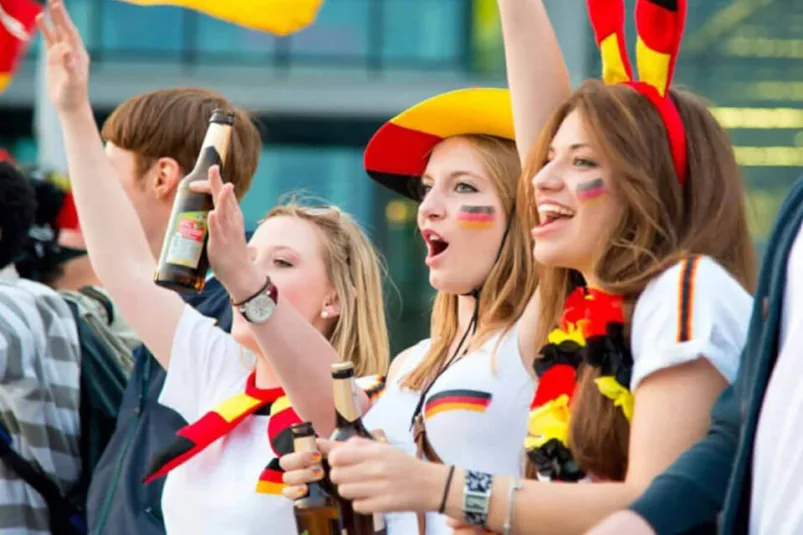
Berlin doesn’t fit into a single fan section. The city watches soccer in Köpenick, Charlottenburg, Wedding, Neukölln, and on small fields between apartment buildings. If you want to understand how Berlin lives and breathes soccer, you have to look beyond just the big names.
Why Soccer in Berlin Never Belongs to Just One Club
In many cities, soccer is easy to describe: one club, one stadium, one color, one shared legend. Berlin works differently. Here, Union and Hertha represent two major poles, but in between lies a much broader spectrum. There are neighborhood clubs, pickup soccer fields, international fan groups, bars with Premier League scarves hanging on the walls, and cafés where the Süper Lig is on over the weekend.
This diversity makes soccer in Berlin less polished, but more interesting. An afternoon might begin in Köpenick, where Union stands for a sense of community, forest trails, and a stadium culture all its own. In the evening, someone in Charlottenburg talks about Hertha, the Olympic Stadium, and the question of why this club is so hard to pin down. Two stories, one city, but no simple middle ground.
That’s exactly why Berlin soccer often feels more like a map made up of many small dots. Some are loud and well-known, others almost invisible. If you only look at the standings, you’re missing too much. What matters is where people gather, what language is spoken at the next table, and how the focus shifts between the club, the neighborhood, and live scores—without any single one of these dots telling the whole story on its own.
Backyards, Artificial Turf, and the Quiet Side of the Game
Berlin’s interesting soccer doesn’t just begin with the kickoff of a Bundesliga match. It also begins on artificial turf fields behind schools, on fenced-in grounds in Wedding, on small fields in Kreuzberg, or in parks where goals are made out of jackets. There, the game is less of a spectacle and more of a habit. Kids show up in jerseys that are too big; adults stand on the sidelines; someone shouts instructions over the fence.
These places lack grand drama, but they give the city depth. On Saturday mornings, the air smells of coffee from thermos mugs, wet grass, and snacks from the corner store. Parents talk about the next game, coaches collect balls, and teenagers compare scores from other leagues after the game. Here, Berlin doesn’t feel like a capital city, but like a neighborhood.
It is precisely this level that matters, because it grounds the big-time soccer. Union and Hertha provide the big names, the stories, and the rivalry. The small fields provide everyday life. Between the two, a soccer culture emerges that consists of more than just fan merchandise and trips to the stadium. It thrives on routines: practice after school, games on Sunday, a quick glance at the scores, a chat by the fence, the walk home through the neighborhood.
Berlin’s Diversity in Soccer
A Hertha fan might have friends who support Union. A Turkish shop owner talks about Galatasaray. A group of Spaniards watches La Liga. In a bar in Neukölln, two games are playing at the same time, while someone at the table is still checking the results from England.
That’s exactly what makes it fun: checking scores, comparing games, reading statistics, and discussing the matches with friends. Berlin is a particularly fitting place for this because the city isn’t tied to a single soccer narrative. It jumps between stadiums, bars, backyards, and languages. If you’re out and about on the weekend, you can experience the same sport in very different ways: professional, improvised, loud, intimate, international, or just as a side note.
A Handy Map for Different Soccer Nights in Berlin
Not every soccer night in Berlin calls for the same venue. Sometimes it’s about the atmosphere, sometimes about proximity, and sometimes about a specific community. If you want to get a better feel for the city, you shouldn’t just ask which game is on, but which setting is the right fit.
| Soccer Moment in Berlin | Best Spot | What Makes It Special |
|---|---|---|
| Big Union Match | Köpenick, bars near the S-Bahn, private get-togethers in the East | Strong local ties, lively discussions about the club and the neighborhood |
| Hertha Match Day | Charlottenburg, West Berlin bars, gathering spots around the Olympic Stadium | Longer commutes, mixed crowd, lots of debate about identity |
| International League | Neukölln, Kreuzberg, Wedding, bars with multiple screens | Multiple languages, various clubs, often very lively tables |
| Weekend amateur soccer | Artificial turf fields, school grounds, small clubhouses | Close to everyday life, less spectacle, more neighborhood vibe |
| Spontaneous soccer night | Neighborhood pub, late-night corner store, friends’ kitchen | Little planning, lots of chance, phone calls to stay connected to other games |
This overview shows why Berlin soccer is hard to fit into a simple recommendation. The city doesn’t offer one perfect place, but rather many suitable places for different kinds of connection. Sometimes it’s the club that matters, sometimes the neighborhood, sometimes the language, and sometimes the group you’re watching with.
Why Berlin’s Soccer Remains Strong Precisely Because of Its Contrasts
Berlin doesn’t neatly categorize its soccer, and that’s precisely where its strength lies. Union, Hertha, backyards, international bars, and small club fields all coexist rather than forming a single, unified line. A fan can watch the Bundesliga on Saturday, stand on the sidelines of a youth field on Sunday, and check scores from multiple leagues in between. Anyone who only sees the big clubs is missing half the story of this city.

Berlin Poche
Editorial Team
Always looking for new addresses, we like to share our discoveries and make you discover the best places in Berlin.