10 Christmas Traditions in Germany
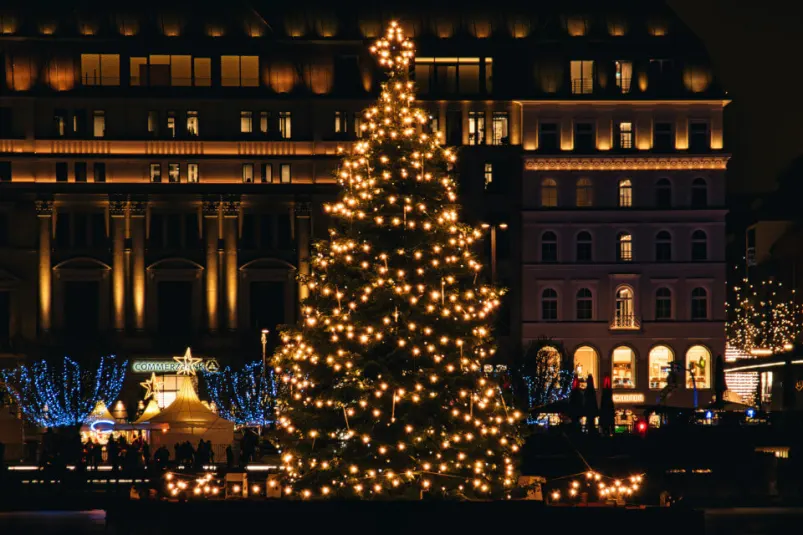
Christmas in Germany is a mixture of ancient, deeply rooted traditions, folk customs, and cherished traditions. Much of it seems so natural that we rarely ask where it actually comes from – why we light candles, why presents are placed under a tree, or why St. Nicholas is sometimes strict and sometimes friendly. Behind many of these Christmas rituals and customs lie surprisingly old stories, regional peculiarities, and small cultural misconceptions that make Christmas exactly what it is today.
1. The Advent wreath – learning to count with candles

The Advent wreath is younger than many people think. It was invented in 1839 by the Hamburg theologian Johann Hinrich Wichern to make it easier for children in an orphanage to wait for Christmas. At that time, the wreath still had 24 candles – one for each day of Advent. It was only later that the version we know today, with four candles, became popular. So the fact that we light one every Sunday is actually a greatly simplified version of an educational aid.
2. The Christmas tree – a German export hit
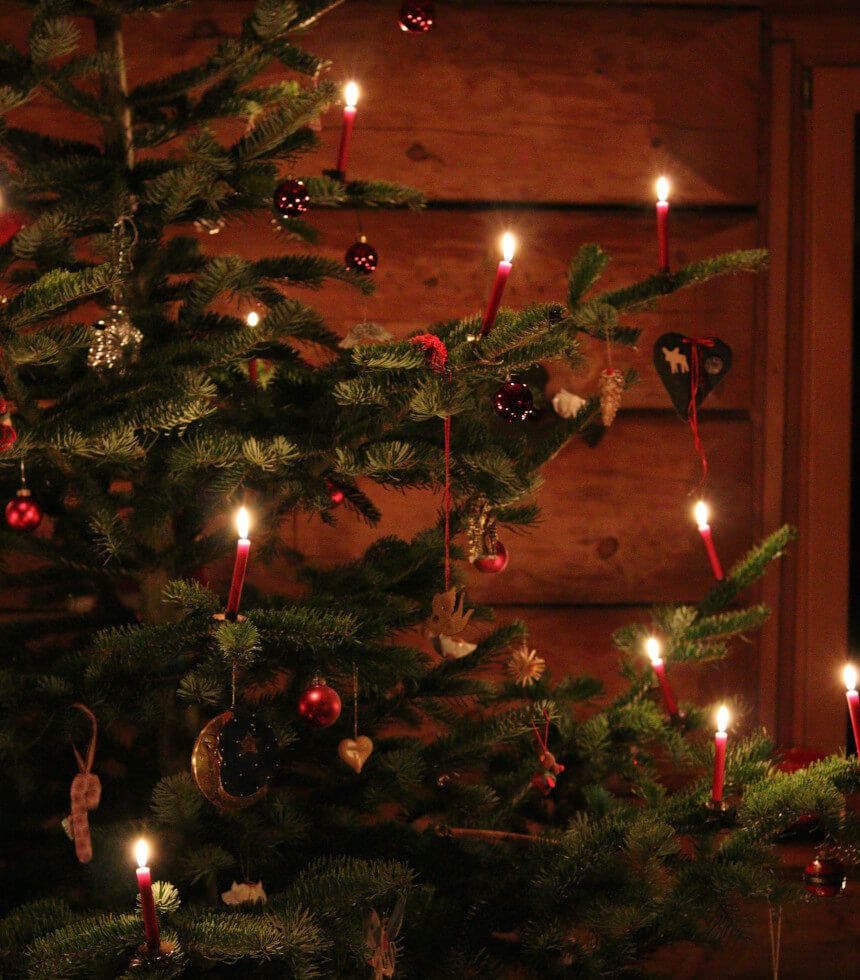
The decorated Christmas tree actually originated in Germany. In the 16th century, wealthy families in cities such as Strasbourg and Freiburg placed fir trees in their living rooms. Initially, this Christmas tradition was controversial—some clergy considered it pagan. Later, German emigrants spread the tree tradition around the world. The fact that Christmas trees are now found even in New York and Tokyo is therefore a piece of German cultural history.
In many German households, real candles are lit at Christmas. Candles are as much a part of Christmas in Germany as pine needles are to the living room floor. Interestingly, real candles on Christmas trees only became popular in the 18th century and posed a real risk at the time. Nevertheless, people stuck with them. Candles are not only meant to provide light, they are also meant to create atmosphere. Perhaps it is precisely this flickering, slightly imperfect light that makes Christmas feel “right” for many people.
3. The Christmas market – from market day to winter romance
Originally, Christmas markets were purely supply markets for the winter: people bought meat, candles, and non-perishable food. It was not until the 18th and 19th centuries that sweets, toys, and mulled wine were added. The famous Striezelmarkt in Dresden, dating back to 1434, is considered one of the oldest. Today's romantic image of lights, music, and stalls is the result of many centuries of city life.
Here are the most beautiful Christmas markets in Berlin.
4. St. Nicholas Day – rewards, education, and a little bit of fear
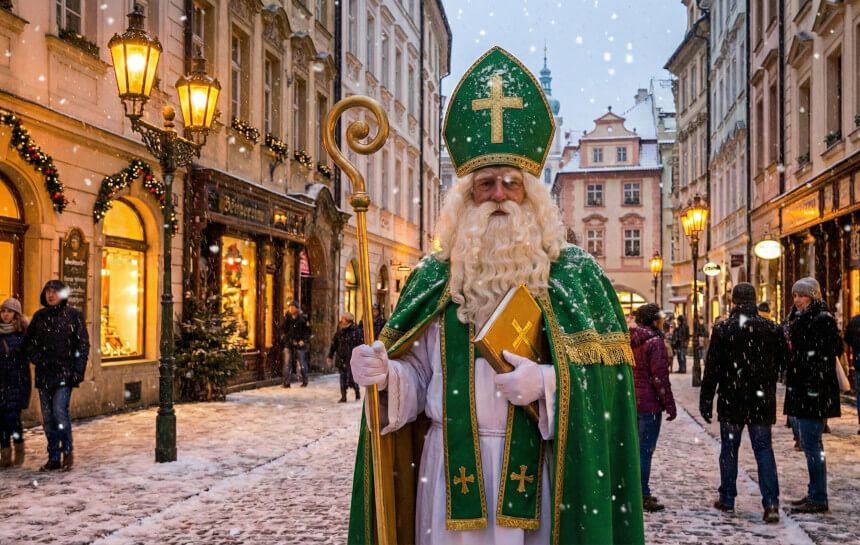
St. Nicholas Day on December 6 dates back to the historical Bishop Nicholas of Myra, who was known for his helpfulness and generosity. Over the centuries, this developed into an educational ritual in Germany: children cleaned their boots, hoping for nuts, apples, and sweets – while knowing that their behavior over the past year had been “evaluated.” Especially in the 19th century, St. Nicholas was less a friendly gift-giver than a moral authority who rewarded good behavior and clearly pointed out missteps.
This educational tradition also included a darker figure: Krampus. With fur, horns, and a terrifying mask, he embodied the counterpart to the benevolent St. Nicholas. Krampus had his roots in pre-Christian Alpine rituals and was later integrated into Christian customs. While he used to cause real fear, today he is primarily a folkloric spectacle—during Krampus runs, masked figures parade through the streets, loud, wild, but playful. The change shows how Christmas customs are changing: what once deterred people now serves as a reminder that Christmas used to have a serious, admonishing side.
Translated with DeepL.com (free version)
5. Present-giving on Christmas Eve – a German tradition
While in many countries presents are unwrapped on the morning of December 25, in Germany they are traditionally given on the evening of the 24th. The reason for this lies in the Protestant Reformation: Martin Luther wanted to shift the focus from St. Nicholas to the Christ Child – and that brought gifts with it. To this day, this means that Christmas Eve is often more emotionally important here than Christmas Day.
6. The Christ Child – heavenly PR with curls
The Christ Child is not a biblical figure, but a Reformation invention. Luther wanted to abolish the cult of saints and created a new, child-friendly symbolic figure. Later, this became the angel-like being with curls and a white robe. Ironically, in many regions, the Christ Child was supplanted by Santa Claus over time – even though that was exactly what Luther had originally wanted to prevent.
7. Baking cookies (Plätzchen) – stocking up on cinnamon

The tradition of baking cookies together originated in medieval monasteries. Spices such as cinnamon, cloves, and aniseed were considered precious and were mainly used on special occasions. The fact that we now store vanilla crescents and cinnamon stars for weeks on end is a relic of winter stockpiling – and explains why cookie tins often survive entire generations.
8. The Christmas pyramid – candle power from the Ore Mountains
The wooden Christmas pyramid originates from the Ore Mountains, where candles replaced the light of the missing mining lamps. The rising heat sets the figures in motion – an early example of mechanical Christmas art. Many historians believe that the pyramid was the actual precursor to the Christmas tree before the tree became popular nationwide.
9. The communal Christmas dinner – sausages instead of a feast

In many German households, Christmas Eve dinners are surprisingly simple: potato salad and sausages. The reason is pragmatic: in the past, people fasted on December 24, and only on the holidays did they eat roasts and feasts. The custom remained and is still a quiet sign that Christmas does not necessarily have to be opulent to be meaningful.
Here are 7 typical Christmas dinners in Germany.
10. Christmas carols – catchy tunes with a long history
“Silent Night” premiered in Austria in 1818 and was actually only supposed to be played once—because the church organ was broken. It was pure coincidence that the song became known around the world. Many German Christmas carols came about under similar circumstances: improvised, simple, easy to sing along to. Perhaps that is precisely where their magic lies.
Christmas customs are more than just deeply rooted, old traditions
German Christmas traditions are not a rigid set of rules, but a living cultural mosaic. They have been changed, simplified, reinterpreted – and that is precisely why they still work today. Whether religious or simply cozy, loud or quiet: Christmas in Germany is less a fixed ritual than a familiar feeling that is passed down from generation to generation. And perhaps that is the most important tradition of all.

Berlin Poche
Editorial Team
Always looking for new addresses, we like to share our discoveries and make you discover the best places in Berlin.